


Different raw materials are used in manufacturing industries. The properties of each of those materials differ, affecting their specific use cases. Among those materials, ABS is very popular mainly because of its strength. Despite its popularity, many people lack basic knowledge of ABS. So, they ask: What is ABS material?
However, the use of ABS is becoming more widespread across various sectors. This is not only because of its excellent strength and durability. Instead, the toughness and chemical resistance of this material also contribute to its usability. In this article, I will discuss everything about ABS, including its key properties and applications. So, let’s get started!
What is ABS Material?
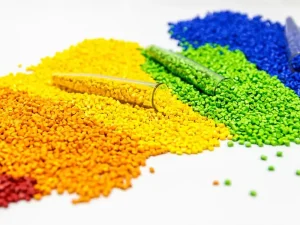
ABS stands for Acrylonitrile Butadiene Styrene, a synthetic plastic. This means that ABS is a man-made material produced in laboratories. This material has excellent strength despite its very lightweight nature. Additionally, its surface finish is another prominent advantage, making it stand out among other plastics.
ABS is a thermoplastic material developed in the 1940s. Since it is thermoplastic, it can be repeatedly shaped and reshaped. When heated, this material becomes soft and very easy to shape. On the other hand, when you cool it, it hardens. Before the 1940s, some types of plastic were available, but they lacked strength.
Soon after its development, ABS became very popular in the 1960s due to its strength. The raw materials used in making ABS include Acrylonitrile, Butadiene, and Styrene. This plastic type is produced through polymerization. The raw materials used in making ABS are the key reason behind its top-notch properties.
For example, acrylonitrile imparts chemical resistance to ABS. Similarly, butadiene also helps improve toughness in ABS. These raw materials are first mixed and then heated to make fine granules. These granules are further heated to make plastic products, such as toys. This melting generally happens in injection molding machines.
Properties of ABS Plastic
ABS has many valuable properties that make it useful in almost every industry. From TV remotes to toys – this plastic is used everywhere. In the section below, I will discuss some key properties of ABS.
1- Excellent Strength
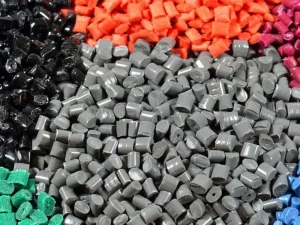
ABS plastic has excellent strength and toughness. Thanks to this, parts or products made of this plastic can withstand heavy loads and impacts. Even if an ABS-made product falls from a height, it won’t break. That’s because of this plastic’s excellent toughness. As mentioned above, ABS is made of three ingredients: acrylonitrile, butadiene, and styrene. Acrylonitrile and butadiene improve the strength and toughness of this material, respectively. ABS-made products aren’t affected even if you handle them carelessly.
2- Lightweight & Good Surface Finish
ABS plastic is very lightweight, which is another prominent advantage. The primary reason for its lightweight is its low density of 1.04 g/cm³. As a result, ABS parts are very lightweight. You’ll see that many car parts are made of these materials.
They offer excellent functionality, durability, and strength despite their very lightweight design. Apart from weight, the surface finishing of ABS is also top-notch. Due to its styrene content, ABS appears smoother and more polished. It looks even more attractive when a paint coat is applied to this material.
3- Easy to Mold and Shape
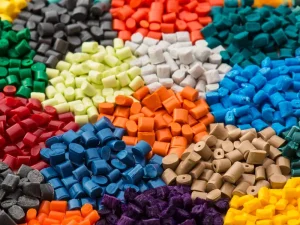
As mentioned previously, ABS is a thermoplastic material. This means it is very flexible and can adopt different shapes and properties. When undergoing heating, these plastics become soft. During this, manufacturers shape it to make various products using a dedicated mold. When cooled, the soft plastics harden and become strong. As a result, ABS material is very easy to shape and reshape into different products. Their use is widespread in injection molding and 3D printing.
4- Heat & Chemical Resistance
ABS plastic offers excellent molecular stability. So, this material does not start melting at slightly higher temperatures. As a result, ABS continues to maintain its integrity and perform. ABS-made products can easily withstand high temperatures, especially when exposed to sunlight. Additionally, this material is top-notch in terms of chemical resistance. The reason is that it contains acrylonitrile, which makes it resistant to chemicals. This material remains in good shape even when exposed to acids, alkalies, etc.
Quick Note: Some manufacturers make ABS flame-retardant. How? They add specialized fire-resistant additives during the production process. These additives reduce oxygen concentration near these plastics. When there is less oxygen, the burning process gets slower. This is one of the main reasons ABS is used to make the casings of various electronic devices.
5- Low Water Absorption & Affordable
ABS plastic has a very stable and dense structure. Its non-porous structure makes this material absorb little to no moisture. Therefore, this plastic type is used in creating products that require moisture resistance. Even if this material is kept in water, it will still maintain its shape, strength, and overall quality. Additionally, the price of ABS plastic is low, making it affordable. Remember, you’ll see some very cheap plastics. But they are compromised in terms of their properties. Conversely, ABS is inexpensive yet offers excellent strength and top-notch moisture resistance.
Types of ABS Plastic
There are different types or grades of ABS material. These types are based on different compositions. Manufacturers use different proportions of either acrylonitrile, butadiene, or styrene. As a result, the production of ABS with different properties leads to different grades of these materials. Here is the list of some of the most used ABS types:
- Plateable ABS
- High-Impact ABS
- UV-Resistant ABS
- Heat-Resistant ABS
- Flame-Retardant ABS
- Electroplating-Grade ABS
High-impact ABS consists of a higher amount of butadiene. This material adds toughness and makes it resistant to impacts and shocks. On the other hand, flame-retardant ABS consists of an additive. Each of the above-mentioned types consists of unique compositions. As a result, their properties change, leading to different ABS grades.
Applications of ABS Plastic
The use of ABS is widespread across industries. Why? That’s because this type of plastic offers many unique properties. Some of these include excellent strength, durability, light weight, and non-porousity. In the section below, I will explain some prominent applications of ABS plastic.
1- Electrical Products
As mentioned above, ABS is flame-retardant thanks to the presence of specific additives. This means that ABS reduces the risk of fire and makes its use safer. Electronic products can be exposed to high temperatures, which can lead to overheating. Thanks to durable ABS plastic, those products don’t catch fire quickly and remain stable. Additionally, this material is easy to mold and can be used to make products of various shapes and designs. So manufacturers use molds to make frames and casings for different devices.
2- Automotive Industry
The automotive industry widely relies on plastic materials to make different vehicle parts. Among these materials, ABS is the most preferred. Manufacturers use ABS to make vehicles’ mirror cases, dashboards, and many other parts. ABS is lightweight, so the vehicle parts made from it are also very lightweight. As a result, there is less load on vehicle engines, improving vehicle efficiency. Its excellent impact resistance is another key reason it is an ideal option for the automotive sector.
3- Toys and Sports Equipment
As I said earlier, ABS is not a very expensive material. However, it offers many valuable properties such as strength and excellent durability. This makes it an ideal option for making toys and other sports gear. Remember, toys need to be both affordable and durable. If they are not durable, kids can break them quickly. Additionally, if they are not inexpensive, parents are less likely to buy them. Therefore, manufacturers use ABS to make toys both durable and affordable.
4- Protective Gear
One of the key properties of ABS is its excellent toughness. That’s because of the butadiene component in ABS. So, this material can readily absorb impact when struck. As a result, you’ll see ABS used in the manufacture of protective gear such as helmets and knee pads. As you know, helmets always absorb the impact and safeguard you from head injuries. This impact absorption is due to the helmet’s outer shell being made of ABS plastic.
5- Plumbing & Tool Handles
The use of ABS is quite common in the production of various plumbing products. For example, the valves, connectors, and many other parts are made of ABS. As I said earlier, ABS material does not absorb moisture. So, it is used to create different plumbing parts where moisture resistance is essential. Apart from that, this material is also used to make handles for tools such as screwdrivers and drills. Additionally, ABS is used to produce a range of decorative products.
Conclusion
Let’s conclude – ABS is one of the finest materials used in different industries. It offers excellent properties that enhance its value. For example, its exceptional toughness, strength, and durability make it an excellent choice for a wide range of applications. Best of all, you get all these properties despite this material being lightweight. Understanding this material is crucial if you want to get the most out of its usability. In this article, I discussed ABS, its popular applications, and key applications.
