


GBM Mold can be your go-to partner for connector molding. We are capable of providing complete manufacturing solutions. Our skilled team ensures the top quality and durability of the molds we create. For precision, we always keep the latest technology. Our molds meet the needs of leading OEMs. Therefore, trust us to deliver durable, high-performance molds every time.

End-to-end Manufacturing Capability
We handle every step of the mold-making process. From design to production, we ensure quality and efficiency.

Experienced Engineering Team
Our engineers possess years of expertise in crafting high-quality connector molds. GBM creates molds for all types of connectors.

Advanced QC System
The GBM QC department is equipped with advanced testing machines. We guarantee the reliable performance of products.

Top Quality OEMs
We work with leading OEMS. Our molds always meet the highest industry standard.
Introducing Connector Molds Manufacturing
Connector molds are the cavities of the same shape as the final connector part. The process of making these molds is typically referred to as connector mold manufacturing. You may want to create various types of connectors. For example, radio frequency, fiber optic, electrical, or even hybrid are noteworthy. A connector mold typically helps to shape these products and join wires and circuits.
Here, GBM provides you with full support, from mold making to delivering connector parts. If you only need the mold, we also offer it for sale. This flexible service enables us to be versatile for all types of molding projects. Therefore, our molds are suitable for a wide range of applications. We have sent our products to the medical, automotive, and electronic industries.
Connector molding typically begins with designing. It could be either custom or standard solutions. If it is a standard one, the process is usually shorter. Consequently, the cost is generally lower. On the other hand, custom solutions need prototyping and custom mold designing. It usually adds to the total cost.
It is common that connector molds can be of various types. Each of them also has its unique shapes and sizes. It could be as simple as standard terminals. On the other hand, it could be as complex as hybrid ones. So, the connector molding cost heavily depends on what type of product you are dealing with. Regardless of the kind, GBM Mold always ensures secure and reliable connections.
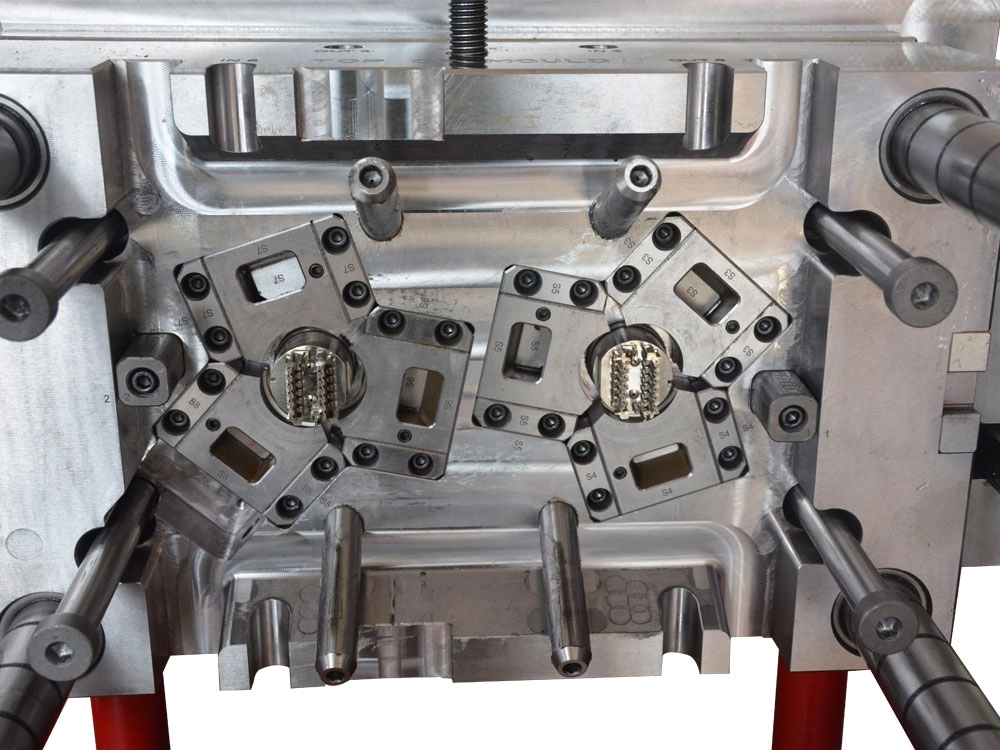
Types of Connector Molding
Connectors and cable assemblies typically come in a variety of shapes and sizes. This diversity typically comes from the need for unique connection types. GBM offers all four types of connector molds. Besides, we support both small and large projects. Therefore, choose GBM for all your connectors and mold-making needs.

Single Pin Connector Mold
As the name implies, these connector mold creates connectors with one pin. They typically have a cylindrical and straightforward structure. Well, some may have a rectangular form as well. The pin is a single metal rod or prong. These molds produce compact connectors. Typical examples might include USB Type-A, 3.5mm audio jacks, and coaxial connectors.

2 Pin Connector Mold
2-pin connector molds, on the other hand, form connectors with two pins. You may find these shapes in AC power plugs, DC barrel connectors, LED strip connectors, and other similar devices. 2-pin connector mold typically features a small, flat, or rounded structure. The pins are parallel metal prongs. These molds make dual-contact connectors.

Multi Pin Connector Mold
Multi-pin connectors come with more than two pins. This type of connector injection molding is typically complex and challenging to manufacture. It often comes with a rectangular or grid-like structure. In most cases, you may find the pins are arranged in rows or cluster forms. HDMI, D-sub, RF, hybrid, and elec all have a series of multi-pin connectors.

Specialty Connector Mold
Special ones are all custom-designed. You might need them for specific connections. They are always unique and vary in form. These connectors could be circular, rectangular, or irregular in shape. The pins or contacts are also designed in specific layouts. RF, custom industrial, and medical sensor connectors fall into this category.
Molds For Different Connector Parts
Every electronic device we use needs connectors and cable assemblies. So, this library is huge, and you have seen that we create various types of connector molds. You also know that they usually come in many shapes and sizes. To make things easy, we have divided the parts we make into three groups.

Terminal Components
Terminal components typically connect wires to devices. We make molds for pins, sockets, crimps, strips, and other types of terminals. Each type has its unique shape and job. These parts must fit perfectly, so our molds are made with high precision. We can also produce them in large quantities to meet your specific needs.
Housing Components
Housing parts typically protect the terminals from impacts. It also creates an insulation of the conducting parts. They also help connectors lock into place. At GBM, we also make molds for these plastic housing, metal housing, connector shells, and end caps. Each mold we produce is designed for strong and safe parts. We can make many of these parts to fit different types of connectors.
Connector Assemblies
Connector Assemblies are the complete units. They hold all the smaller parts together. We manufacture molds for backplane connectors, cages, and other components. We also offer mass production for you if necessary.
GBM Connector Mold Manufacturing Services
At GBM, we typically offer complete connector injection molding services. Need only molds for your business? We provide custom solutions for that. You don’t have the space to set up the connector molding machine, right? It’s fine; we help you create batch products for your business. From design to final mold making, we help you in every step.

Mold Design & Validation
Have a design for your product? It’s enough for us to create the mold design. Our engineers will analyze the product design and prepare a quotation for your project. Once you approve it, they begin designing the mold. Each mold is tested and validated before production. This way, GBM can ensure high-quality and reliable production.

Precision Injection Connector Mold Making
At GBM, we keep advanced CNC, die casting, and electric discharge machines. Based on the mold design, our engineers selected the most suitable method for making the mold. During the production of the connector, we ensure the highest quality standards. We never compromise the importance of clean and disciplined output.

Prototyping
We make sample molds for testing before full production. This helps check size, fit, and function. You can see and feel the part early. We utilize high-precision machines to achieve fast and accurate results. Changes can be made quickly based on your feedback. Perfect for early-stage projects.

High-Speed Stamping Die Making
We build stamping dies for making metal terminals and housings. Our dies support high-speed production with tight tolerance. This helps reduce waste and save time. Suitable for pin, socket, and strip terminals. Each die is tested for durability and performance. Fast delivery and full support are provided.
Why Choose GBM for Electronic Connector Molds?
There are several reasons why you should consider GBM for your connector molding project. In a single sentence, our tools, skills, and machines are what you need to make an efficient connector mold. We ensure that your products are reliable and of high quality. That’s what you need to satisfy your customer.
Ability To Process Complex Geometries
We can create molds with very detailed shapes. Even small or tricky parts are no problem. This is particularly helpful when your connectors have complex designs or require special features.
Advanced Technology for Mold Making
We use the latest machines and software. This helps us make molds faster and with better accuracy. Your parts will look and work exactly as planned.
Precision & Tight Tolerances (up to ±0.005mm)
We create molds with extremely precise accuracy. Our molds can match details as small as 0.005mm. It is ideal for parts that require a precise fit every time.
Ability to Produce High-Performance Molds
We design molds that can withstand high speeds and pressures. They work well for both plastic and metal parts. This helps you get better parts with less waste.
Prolonged Mold Life
Our molds are made with strong, durable materials. They last a long time, even with heavy use. They also save you money and keep your production running smoothly.
Production Efficiency
Our process is fast and smart. We reduce errors and save time. GBM helps you obtain your molds and parts more quickly, allowing you to start production without delay.
GBM Injection Molding Network
Take a look at our machines and workspaces. Here you’ll see how we make connector molds. Our modern equipment enables us to produce high-quality parts with speed and precision.

Step-by-Step Process of Making Molded Cable Connectors
Let’s take you on a tour of how we create molded cable connectors. At GBM, we typically follow a clear process to make strong and reliable cable connector parts. We understand that each step is essential. We also understand the importance of clean and disciplined production. From selecting the right material to final testing, we ensure everything is done correctly.
Step 1: Selecting The Right Material
The first step is to choose the right materials for your connector part. There are various options in this case. Some are cheap but not durable. Some are expensive, but they are suitable for long-lasting work.
The choice of materials typically comes from your project preferences. From plastics, most customers opt for PA, PBT, or LCP. These plastics are generally strong, heat-resistant, and safe for electronics. From metals, we have copper, brass, aluminum, or steel.
We also verify that the material is suitable for the intended use of your product. You might be looking for waterproof or heatproof features. Therefore, selecting the right materials is a crucial step to ensure the product fits your project.
Step 2: Mold Design
Once we have the list of materials and your approval, we will start designing the mold. Note that the material selection is mentioned in our quotation. The prices heavily vary based on it. However, the complexity of the mold also affects the total cost.
The mold design is done in two ways: classic design and simulation testing. At GBM, we have a team of designers who create the CAD and 3D drawings of the mold. Once done, we send it to test in the simulation world. Our engineers observe the flow of molten plastics and the behavior of the whole process. Once tested, our engineers move it to create the prototype.
A good mold design indeed helps the parts come out smooth and firm. We double-check everything before making the mold.
Step 3: Injection Molding
Once our prototype is ready, we test it and wait for approval from the experts. We ensure that our final mold is capable of running millions of injection cycles. Once everything is approved, we create the mold and send it for the production of connector parts.
The injection process is typically the same as other injection molding processes. The raw material needs to be melted. Then, using the injection device, the molten material is injected into the mold cavity, where it assumes the desired shape. Once cooled, we safely remove it from the mold using the ejection pin.
In the case of connector molding, we may employ overmolding or comolding processes. Therefore, the exact molding process depends on the type of final part being made.
Step 4: QC & Testing
We check every part before sending it to you. Our team inspects the size, shape, and surface of the item to ensure it meets our standards. We use tools to measure even the most minor details. Some parts go through strength or heat tests.
Moreover, we also verify that the connector fits well with cables or other components. If anything is wrong, we fix it fast. Quality control helps us deliver only perfect parts to you. We keep a record of each batch. This ensures you get reliable parts every time.
Ready to Start Your First Connector Mold Project?
Let’s bring your idea to life. Our team is here to help with design, molds, and production. Contact us now to get a fast and free quote.

Frequently Asked Questions
End connectors are the components located at the end of a cable. It means that’s the end of the connection. You can see this type of connector near you, such as USB, DC, and audio jacks. They connect devices and carry signals. Making end connections is different because the mold must fit both the connector and the cable end. In this case, we require the use of insert molding and overmolding technology.
Molded barrel connectors are ideal for connecting power cables. You will find it in chargers or adapters. They are round and usually found at the end of DC power cables. Unlike USB or signal connectors, barrel connectors mainly carry power.
To make a molded barrel connector, we first place the connector and cable into a mold. Then we use plastic injection molding to cover and seal it. This way, we can maintain a strong and secure connection. Overmolding and insert molding are often used to create a molded barrel connector.
A molded lead crank connector is a crucial component of a car’s transmission system. It mainly connects sensors or control wires to the crankshaft. The plastic mold typically protects the wire connections from heat, oil, or any sort of movement.