


Injection molding is one of the most popular, efficient, and precise manufacturing processes today. It uses molten material that is injected into a mold. As it cools, the molten material solidifies into the exact shape of the mold cavity. In injection molding, many people focus only on melting the material and shaping it. They usually overlook the importance of cooling in the injection molding process.
Cooling is even more important for quality and efficiency. It controls how the plastic hardens, affecting the product’s strength. Without proper cooling, even a perfect mold can produce weak or warped parts. In this guide, I will discuss why the cooling step is crucial in injection molding and how it works.
Overview of Cooling Channel in Injection Molding
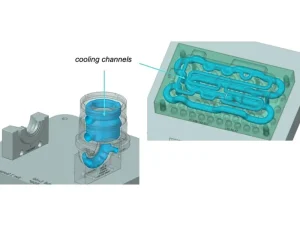
A cooling channel in injection molding is a passage built inside the mold. Through this pathway, a coolant, usually water, flows to remove heat from the molten plastic. As a result, the molten material solidifies and forms a rigid product with the shape of the mold.
In short, cooling channels help solidification and ensure product quality. What makes them special is their versatility. Cooling channels come in various types depending on the size and complexity of a mold. For example, straight cooling channels fit perfectly into a mold with a simple design. However, curved channels are used in molds with intricate designs.
How do Cooling Channels Work in Injection Molding?
The working principle of cooling channels is very straightforward. They work by absorbing the heat from the molten material. Let me explain how. When you inject molten material into the mold, it starts to heat up. This heat must be absorbed or removed for the efficient solidification of the molten material.
That’s why a coolant usually flows through the cooling channels. This coolant continuously takes heat from the mold walls. The mold metal transfers heat from the plastic to the coolant. This steady heat transfer allows the plastic to cool at a controlled and even rate. An even cooling rate ensures the product retains its correct shape.
Why is Cooling Important in Injection Molding?
As I mentioned earlier, cooling helps the plastic part solidify evenly inside the mold. Uniform cooling makes the product stronger and of higher quality. Now, let’s discuss what actually makes cooling important in injection molding.
1- Improves Product Quality
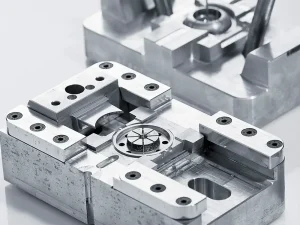
Cooling directly improves the quality of the final product. When the molten material inside the mold cools evenly, it comes out with the proper size and shape. There are no bends or uneven edges, resulting in a smooth, even surface without warping or distortion. A smooth, even surface ensures the product performs reliably under all conditions.
However, if cooling is not done properly, different areas of the plastic may cool at different rates. This uneven cooling can cause problems such as warping and shrinking. For example, the thicker parts of the product will solidify later, while the thinner parts will cool quickly.
2- Reduces Cycle Time
Cooling is the longest step in the injection molding process. This means that cooling has a direct effect on the overall speed of injection molding. When cooling is efficient, the plastic hardens more quickly inside the mold. As a result, you can obtain the final product more quickly, reducing the total time per molding cycle.
In other words, shorter cycle times mean more parts can be made in the same amount of time. With shorter cycle times, machines operate for less time overall, reducing energy consumption. All this reduces the overall cost of injection molding and makes it cost-effective in the long run.
3- Prevents Part Defects
Another important aspect of cooling in injection molding is that it prevents defects in the product. How? When plastic cools evenly, it solidifies smoothly and attains its intended shape. Moreover, the even solidification reduces the chances of warping and shrinking. As a result, the product will have an even shape with no defects. Cooling also reduces internal stress in the plastic.
If a part cools unevenly, the uneven cooling can build up and cause the part to crack under load. Moreover, as I said above, the uneven cooling can cause surface defects such as sink marks and cracks. The thick part of the product will take longer to solidify and might shrink. However, the thin part of the product solidifies more quickly. This variation in cooling causes some parts to become rigid while others are dented.
4- Controls Mechanical Properties
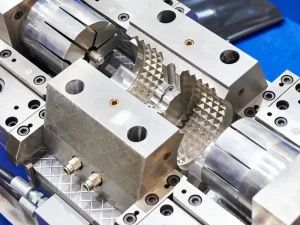
Cooling also directly affects the mechanical properties of molded parts. These properties include their strength, hardness, and flexibility. For example, if the material cools at a uniform rate, it will develop its mechanical properties properly. The part will gain its strength, toughness, and durability during cooling, with no defects.
This will help it perform well in its intended application. If cooling happens too fast or unevenly, the plastic structure may not form correctly. The finished part may have defects. These can lower its mechanical properties, such as strength and ability to bear stress. It will not perform well for a specific purpose.
5- Lowers Manufacturing Cost
Cooling in injection molding also helps reduce manufacturing costs in many ways. As I said above, when cooling is efficient, the part will solidify more quickly. This allows more products to be made in less time. As a result, production speed will increase, reducing the cost per part.
Moreover, the cooling also helps reduce part defects. Fewer defective parts mean less material is wasted, saving money on raw materials. Moreover, fewer defective parts also reduce the need for rework or repairs and save money. Additionally, efficient cooling lowers energy consumption and machine wear. This saves money on machine replacements and long-term maintenance.
Factors Influencing Cooling Efficiency in Injection Molding
The cooling system in injection molding might seem simple on the surface. But it can be affected by several factors. Let’s discuss the factors that highly influence the cooling efficiency in injection molding.
1- Mold Material
The injection mold material significantly affects cooling efficiency in injection molding. Generally, aluminum and steel are used to make molds. Both of these materials affect the cooling differently. For example, steel is a durable, strong, and rigid material. Therefore, the steel mold lasts longer. However, because it is harder, steel cannot transfer heat easily. Hence, cooling efficiency might be affected by steel, and molten material may take longer to cool. On the flip side, aluminum is a soft material and transfers heat much faster. This allows the part to solidify more quickly.
2- Cooling Channel Design
The design of cooling channels is another crucial factor affecting cooling efficiency. Cooling channels are the pathways through which the coolant passes and absorbs the heat. Their size, shape, and placement determine how evenly heat is removed. For example, if channels are placed too far from the molten material, they will not cool some parts. Those areas will remain hot, leading to hot spots or burn marks on the finished parts. Hence, modern molds now use carefully designed channels to match the part’s shape.
3- Part Thickness & Shape
The thickness and shape of a plastic part significantly affect its cooling. If a product has thick parts, they will take longer to cool. The reason is that these parts hold more material that retains heat. However, some thin parts may cool too quickly, leading to burn marks. Similarly, the part’s shape also affects cooling efficiency. For example, if the material has a simple, uniform shape, it will cool more effectively. However, complex shapes take longer to cool.
4- Coolant Temperature & Flow Rate
Another factor that affects the cooling efficiency in injection molding is temperature and flow rate. For example, a cooler, faster-flowing coolant can absorb heat more quickly. As a result, the material solidifies quickly, enhancing production speed. But if the coolant temperature is low and its flow rate is too high, it can affect solidification. Some parts of the material will remain hot and may cause burn marks.
5- Cycle Time Settings
The cycle time is the total time the mold takes to complete one injection molding cycle. The cooling phase is a major part of this cycle time. How long the plastic stays in the mold affects how well it cools. If the cooling time in injection molding is too short, it may increase production speed but leave uneven solidification marks. This can affect the overall quality of the final product. But a longer cooling time in injection molding can ensure that each part is cooled properly. But remember, a longer cycle can increase total cycle time and reduce productivity.
Tips to Optimize Cooling in Injection Molding
Now you know how necessary cooling is in injection molding. If cooling is efficient in injection molding, it not only reduces cycle time but also enhances product quality. So make cooling more efficient. Let’s discuss some tips that will help you increase the productivity of your project.
- As I said above, mold design plays a significant role in cooling efficiency. So, you should choose a mold with uniform wall thickness. It will help the coolant evenly cool the material. Also, place cooling channels close to the mold surface where the plastic touches it.
- Several advanced cooling techniques are now available. For example, if you have a complex-shaped mold, you should choose conformal cooling or 3D-printed channels. These channels provide efficient, uniform cooling to hard-to-reach parts of the material.
- Cooling cycle time is critical in injection molding. So you should adjust the cooling time based on the plastic type, part thickness, and mold design. Ensure the plastic has enough time to solidify completely to avoid unwanted defects. But do not set the cooling time too long, as it can affect your production speed.
- Simulation software can predict cooling patterns before the mold is made. The software shows where some areas might stay too hot (hot spots) or cool more slowly than others. Knowing this in advance, you can adjust the cooling channel design for the mold.
Conclusion
Injection molding is one of the most widely used processes for manufacturing plastic parts. It involves several steps. Among those, cooling is a crucial but often overlooked step in injection molding. That’s why I have discussed the importance of cooling in injection molding. If cooling is not properly controlled, it can result in an uneven, defective final product.
That’s why manufacturers use many cooling channels during molding. These channels carry coolant, absorb heat from the molten material, and allow the molten material to solidify. However, the cycle time, mold material, cooling channel design, etc., affect the cooling efficiency. That’s why balancing all these factors is crucial to achieving a high-quality product.
