


Injection molding is one of the most widely used manufacturing processes today. This process relies on a variety of materials to meet the needs of different industries. Among all these options, nylon stands out as one of the most trusted and versatile choices. There are several types of nylon for injection molding, each of which behaves differently during molding.
For example, some nylons are extra strong, some stay stable in moisture, and some handle high heat. Due to these variations, choosing the right nylon type is crucial to achieving optimal performance in your final product. So how do you know which nylon grade is the right match for your project? Worry not! In this article, I will discuss the most common types of nylon used in injection molding and explain their properties. So, let’s get started!
Why Is Nylon Popular in Injection Molding?
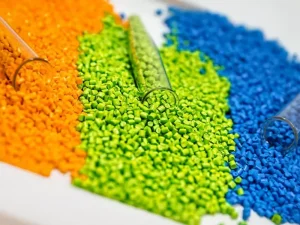
Manufacturers today highly prefer nylon for injection molding. But why? Actually, several reasons explain its popularity. Here is the list of those reasons!
- High Strength and Durability: Nylon is naturally strong and tough. It does not break easily and can handle repeated stress without losing its shape. This strength allows nylon parts to be used in demanding applications, such as machinery components.
- Excellent Friction Resistance: One of nylon’s benefits is its ability to resist friction and wear. It means it can slide, rotate, or move across other surfaces without quickly getting damaged. This reduces the need for lubrication and helps machines run smoothly.
- Heat and Chemical Resistance: Nylon can withstand high heat much better than many other plastics. It stays strong and stable even when exposed to heat during operation. It also has good resistance to oils, fuels, greases, and many industrial chemicals.
- Easy to Mold and Shape: Nylon melts easily and flows smoothly inside the mold. It allows manufacturers to create complex shapes or detailed designs with high precision. This ease of processing also helps reduce manufacturing time and keep costs low.
- Cost-Effective Material: Nylon is preferred for its balance of strength and affordability. Unlike engineered plastics, nylon production costs less overall. Moreover, its strength and durability further reduce the costs of replacements and repairs. That’s why nylon is an affordable option, especially for large-scale production.
Common Types of Nylon for Injection Molding
Now that you know the reasons behind the popularity of nylon as a trusted material. Remember, nylon’s wide usage comes from the fact that it is available in various grades. Each grade is designed for specific performance needs. So let’s look at the common nylon types used in injection moulding and what each offers.
1- Nylon 6 (PA6)
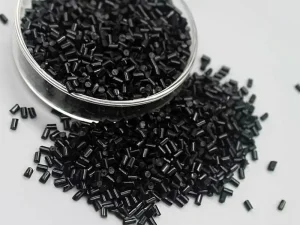
Nylon 6, also known as PA6, is one of the most commonly used nylon types in injection molding. This nylon type offers a perfect balance of strength, flexibility, and cost. Manufacturers love it for its ease of molding. How? Actually, after melting, it flows smoothly into the mold and different types of runners. Thus, you can create intricate parts without visible defects.
Moreover, nylon 6 also has good impact resistance. It means that if a part gets bumped or dropped, it is less likely to crack. But remember that PA6 absorbs moisture from the air. This can cause the part to change slightly in size or shape over time. However, this issue can be controlled by drying the material before molding.
2- Nylon 66 (PA66)
Nylon 66, also known as PA66, is another widely used nylon for injection molding. It is known for being stronger and more heat-resistant than Nylon 6 (PA6). Why? Nylon 66 has a slightly higher melting point. This makes it ideal for high-heat applications, such as the production of automotive parts. Another key feature of PA66 is its rigidity and durability. It means it is strong under pressure and maintains its shape even under high stress. Additionally, you can also reinforce PA66 with glass or carbon fiber to further increase its stiffness.
3- Nylon 11 (PA11)
Nylon 11, also known as PA11, is a unique type of nylon. It stands out because it uses renewable plant-based materials. This is different from other nylons that rely on petroleum. So, nylon 11 is a more eco-friendly option and is suitable for applications where sustainability is essential. One of the most notable features of PA11 is its low moisture absorption.
It means, unlike other nylons, nylon 11 doesn’t swell or change shape much when exposed to water. This gives it excellent dimensional stability, which is critical for parts like tubing and fuel lines. Moreover, nylon 11 is also flexible. So manufacturers often consider it for making hoses.
4- Nylon 12 (PA12)
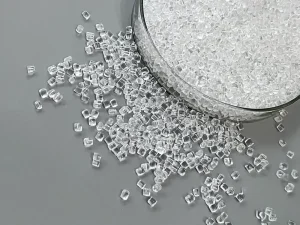
Nylon 12 (PA12) is a high-performance nylon type used in injection molding. This nylon type is known for its exceptional moisture resistance and dimensional stability. Unlike PA6 or PA66, it absorbs very little water. It means that parts made from PA12 retain their size and shape even in humid conditions. PA12 is also flexible and impact-resistant, so it can bend slightly without cracking. This flexibility is helpful for applications like tubing and fuel lines. However, nylon 12 has lower heat resistance compared to PA66. So I recommend making parts that perform in cold environments.
5- Nylon 46 (PA46)
Nylon 46 (PA46) is a special nylon type designed for extreme conditions. Actually, this nylon type has exceptional thermal stability. It can maintain its strength and shape at temperatures where PA6 or PA66 might start to soften. That’s why nylon 46 is mainly used to make high-friction parts that operate continuously at high temperatures.
PA46 also has superior abrasion resistance and mechanical strength. These properties allow it to support heavy loads without cracking or deforming. However, due to these advanced features, PA46 is more expensive and harder to process than common nylons. But industries invest in it for high-performance parts.
6- Nylon 6/12 (PA6/12 Blend)
Nylon 6/12, also known as a PA6/12 blend, is a hybrid. It combines the strengths of Nylon 6 (PA6) and Nylon 12 (PA12). As you know, Nylon 6 is known for its strength and toughness. However, nylon 12 has low water absorption. So manufacturers combine the two nylons to get both qualities in a single nylon.
That’s why you can commonly find nylon 6/12 in power tool housings, industrial components, and outdoor equipment. Another thing I like about this nylon blend is its cost-effectiveness. As you know, separate nylon may cost more with a single quality level. But nylon 6/12 offers better performance with more qualities at lower prices.
7- Nylon 610 (PA610)
Nylon 610 (PA610) is a specific type of nylon used in applications that need chemical resistance. It means it can handle oils, fuels, and many industrial chemicals without losing strength. That’s why you can mainly find it in chemical processing components. At the same time, it is lightweight. But lightweight does not make nylon 610 fragile.
Instead, it has higher mechanical strength and can withstand significant stress and loads. So you can use it to make parts that need extra strength without adding more weight. PA610 also offers good heat stability, but for lower to medium temperatures. At higher temperatures, it may warp, leading to dimensional instability.
8- Carbon-Filled Nylon
Carbon-filled nylon is a type of nylon that is reinforced with carbon fibers. These carbon fibers give the nylon stiffness and dimensional stability. As you can see, carbon is a high-strength, rigid material. So when reinforced in nylon, it makes the nylon more resistant to deformation. The main advantages of carbon-filled nylon are its high strength-to-weight ratio. It means that parts made from this carbon-filled nylon are lightweight yet incredibly strong. That’s why it’s often used in the manufacture of aerospace and automotive parts.
9- Impact-Modified Nylon
Impact-modified nylon is a specially formulated type of nylon. As the name suggests, it is designed to resist cracking, chipping, or breaking under sudden force or stress. To make this possible, impact-modified nylon is produced by adding modifiers or toughening agents. Those agents usually include rubber particles, elastomers, or flexible polymers.
These elements enhance nylon’s ability to absorb shocks and resist cracking. That’s why it is preferred for making power tool parts, automotive bumpers, and sports equipment. Another critical advantage of impact-modified nylon is its dimensional stability under stress. While it is tougher than regular nylon, it still maintains precise dimensions.
10- Flame-Retardant Nylon
Flame-retardant nylon is another specially engineered type of nylon used in injection molding. This type of nylon is made to resist ignition and slow down the spread of fire. How? During its manufacturing, additives such as halogen-free compounds or phosphorus-based chemicals are added. These elements make it resistant to catching fire, unlike regular nylon.
However, these additives are costly, which makes flame-retardant nylon more expensive. But for safety-critical applications, industries rely on this nylon. In addition to fire resistance, flame-retardant nylon maintains strength and durability. It means it can still perform its mechanical function very well with an extra layer of safety.
How to Choose the Right Nylon for Injection Molding
As you can see, there is a large variety of nylon that can be used in injection molding. However, not all those nylons perform the same way. Picking the wrong nylon can lead to weak, deformed, or short-lived parts. So, how do you decide which one is perfect for your part? Here are some key factors you must consider before making a final nylon selection.
- Strength Requirements: The first thing to think about is how strong your part needs to be. If the part will carry heavy loads and face constant stress, you should go for rigid nylon like PA66 or carbon-filled nylon. However, for parts that need flexibility and toughness, PA12 is a better option.
- Moisture Absorption: Remember, some nylons, like PA6 and PA66, absorb moisture. These nylons can make parts that swell or change dimensions over time. Hence, if your application will be exposed to humidity, I suggest you choose nylon grades such as PA12, PA11, or PA610.
- Temperature Requirements: Heat resistance is another factor you must consider. If your parts will be exposed to high temperatures, choose nylons that handle heat without deforming. The list of high-heat-resistant nylons includes PA46 and glass-filled nylons. However, for moderate temperatures, you can use nylon PA66.
- Test and Prototype: If you still cannot decide which nylon is best for your project, I recommend testing a small prototype first. You can ask injection molding manufacturers for prototypes of nylons. After that, check their strength, moisture, and heat behavior.
- Consider Your Budget: Lastly, set a budget for your nylon parts. This will help you narrow down your options. Some high-performance nylons, such as reinforced nylons, are more expensive. These nylons are best suited for safety-critical applications. However, if you’re on a tight budget, PA66 or PA6 might be a better fit.
Conclusion
Nylon is one of the most versatile and widely used materials in injection molding. However, many beginners consider it a single material, which is a misconception. Actually, nylon is a highly versatile material that comes in various types, as I have discussed in this article. All those nylon types have unique properties and advantages.
Some nylons are extra strong, some resist moisture or heat, while others are impact-resistant or fire-safe. This feature’s versatility makes it suitable for a wide range of applications. To choose the right nylon for your needs, understand the differences between them. After that, understand your project’s requirements and select the perfect nylon. Remember, the right nylon saves time, money, and headaches in the long run.
