


Plastic products shape our world in countless ways, from phone cases to automotive parts. But have you ever wondered how these plastic items get their shape? The answer lies in the various types of plastic molding. All those techniques vary in several aspects, such as the material used, production speed, and costs.
For instance, some plastic molding types are ideal for making millions of products quickly. However, some are better for large hollow parts only. That’s why understanding their basics is essential to choose the right one based on your needs. Are you new to this field? No worries! This article will explain each type in the simplest way possible. So let’s get started!
Basic Understanding of Plastic Molding
Before we proceed towards the main types, let’s first discuss what plastic molding is!
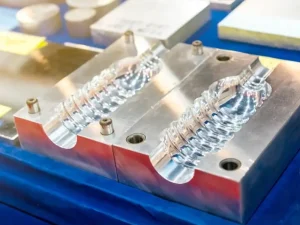
Plastic molding is a process of shaping plastic using molds. A mold is a hollow block or cavity made in the shape of the item you want to create. The plastic is first melted and injected into the mold. Once this hot molten plastic cools, it takes the exact shape of the mold. Finally, it is ejected from the mold and used.
Plastic molding is known for its mass production. For example, you can make thousands or millions of identical parts at once. This makes the production speed fast and reduces overall prices. HOW? As I said above, it used specialized blocks known as molds. Once these molds are ready, you can create several identical parts. As a result, the cost per item decreases.
Moreover, plastic molding is also a flexible process. There are a variety of molds you can use in this process. As a result, you can mold the plastic almost in any shape. This versatility in shapes makes plastic molding common in several industries. For example, it is used in the automotive industry for creating vehicle parts. Other applications include electronics, medical, etc.
Types of Plastic Molding
I hope you got the basic understanding of plastic molding. But remember, plastic molding isn’t one-size-fits-all. Different products require different approaches. So, let’s dive in and explore some common types of plastic molding and what makes each one unique.
1- Injection Molding
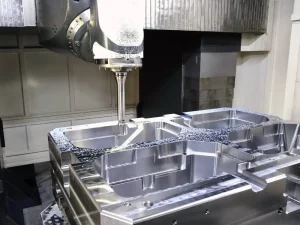
Injection molding is one of the commonly used plastic molding techniques. This process starts with the tiny plastic pellets known as resin. You have to feed these pellets into the injection molding machine. This machine heats the plastic and turns it into a thick paste. The melted plastic is then injected under high pressure into a steel injection mold.
This high pressure ensures that molten plastic fills every corner of the injection mold. Once you fill the mold, the cooling channels inside the machine cool down the plastic. After the plastic cools down and hardens, the molds open, and the final product is ejected. One of the most significant advantages of injection molding is speed, efficiency, and precision of products.

2- Blow Molding
This type of plastic molding is specified for making hollow plastic parts. As the name s
uggests, blow molding is similar to blowing up a balloon inside a mold. Let me explain this procedure in detail. First, you have to heat the plastic until it becomes soft. Then, this soft plastic is formed into a small tube shape known as “parison”.
Place the parison into a mold and air is blown into it. As the air fills inside the tube, the plastic expands and presses against the mold walls. Now the cooling process starts, which hardens the plastic. Once it’s fully cooled, the mold opens and the final hollow shape product comes out. Blow molding is fast and cost-effective, especially for large quantities.
Quick Highlight: Blow molding is very versatile and possesses three main types, including:
- Extrusion Blow Molding: Good for simple hollow products.
- Injection Blow Molding: Used for detailed hollow shapes.
- Stretch Blow Molding: Used for making strong and lightweight products.
3- Rotational Molding (Rotomolding)
Rotational molding is a plastic molding process used to make large, hollow, and seamless products. This process uses a hollow metal mold. That mold is filled with a measured amount of powder plastic(not melted). After that, place the mold with powder plastic into an oven. There, it rotates in all directions, and heat causes the plastic to melt.
As the mold spins, the molten plastic evenly coats the inner wall of the mold. Once the plastic has fully melted and covered the mold walls, the mold slowly cools down. However, during cooling, it still rotates to form smooth and uniform plastic layers. On complete cooling, the final product comes out. Rotomolding is known for making durable products, however, it is a slower process.
4- Compression Molding
Compression molding is one of the oldest plastic molding techniques. This type is mainly used to make large, strong, and simple parts. This process begins with placing a measured amount of plastic, in liquid, solid, or powder form, into a preheated mold. This mold has two halves: top and bottom. Place the plastic into one half and close the mold using high pressure.
The heat and pressure melt the plastic and cause it to flow and fill the mold. After a short time, the plastic starts to cool down and takes its final shape. However, on cooling, there may be extra plastic pieces( flash) left around the edges. So you must carefully trim those flashes for a smooth finish. Moreover, compression molding usually uses thermoplastics to ensure durability.
5- Extrusion Molding
Extrusion molding technique creates long and continuous shapes with cross sections. Those products include pipes, window frames, and plastic sheets. This process uses tiny plastic pellets. Those pallets are fed into a machine known as an “extruder”. Inside the extruder, the plastic pellets are heated, which melts to form a thick paste.
This melted material is then forced through a special tool called a “die”. That die has a specific shape. As the plastic comes out of the die, it takes the shape of the die’s opening. It is then cooled immediately, which hardens the plastic. Now you can cut the cooled product into the desired length or roll it up. Remember, the shape remains the same along the length.
6- Thermoforming
Thermoforming is a plastic molding that creates lightweight and disposable products. Therefore, it is commonly used in the food and packaging industries. This technique uses a plastic sheet. That sheet is placed into a machine that heats it to soften it. However, the sheet should not melt completely. Once the sheet is warm enough, it is quickly spread over a mould.
Now, air or vacuum is used to press the sheet against the mold’s surface. On cooling, the plastic takes the shape of the mold and is removed. But the molded plastic needs trimming to remove extra pieces. However, you can recycle those leftover pieces and use them again. Therefore, thermoforming is an efficient process with minimal material waste.
7- Gas Assist molding
It is another special plastic molding technique that adds a modern touch to traditional molding. Basically, this method is somehow related to injection molding. However, after injecting the molten material, a high-pressure gas, usually nitrogen, is also injected. This gas flows through the center of the part.
As a result, it pushes the molten material outward towards the mold’s walls. This gas insertion helps fill the mold cavity evenly and reduce wrapping problems. Also, it creates a hollow section inside the plastic part. This reduces the overall weight of the final product without compromising its strength.
8- Transfer Molding
This type of plastic molding combines both injection and compression molding. It is mainly used for making complex and detailed parts. Actually, in this process, the plastic is heated in a chamber known as a pot. Once it becomes soft, you have to inject it into a closed mold. The plastic flows through the channels and runner inside and fills the mold cavity.
After the material cools and hardens, molds open, and final products come out. This type of plastic molding uses only thermoplastics. These plastics harden permanently after heating and ensure durability. That’s why transfer molding is used for making circuits, plugs, and electrical switches.
9- Reaction Injection Molding (RIM)
It is a special type of plastic molding that involves chemical reactions to form a product. Therefore, it is mainly used in automotive, medical, and electronic industries. If we look at its procedure, this technique involves two or more raw liquid materials. Those materials are mixed at high speed. After that, this mixture is injected into a mold containing a specific shape.
There, the mixture undergoes chemical reactions that produce heat on its own. This reaction causes the mixture to expand and fill the mold cavity. On solidification, a smooth and detailed part comes out. However, keep in mind that the chemical reaction takes place quickly at low pressure. That’s why the mold should be made from cheaper material like aluminum.
10- 3D Printing ( Additive Molding)
3D printing, also known as additive molding, is a modern and highly flexible plastic molding type. Unlike traditional methods, it builds the parts layer by layer using a digital model. The name additive is given to it because it involves adding material rather than cutting or removing it. This process first takes place by creating a digital model design on a computer.
That design is then sent to a 3D printer. The printer melts the plastic material and deposits it layer by layer to form the final product. One of the biggest benefits of this molding type is that it offers customization. You can create highly complex and detailed parts with precision. Also, it is perfect for prototypes and low-volume production runs.
Choosing the Right Plastic Molding Type
Each plastic molding type has its own strengths, limitations, and best use cases. Therefore, choosing the right one is an important decision when starting a plastic product business. So how would you decide which suits you better? Here is the list of some factors you must consider before finalizing.
- Part Size & Shape: First, consider the part size and shape you want to create. Different plastic molding types work better for various sizes and shapes. For example, injection molding is great for small and detailed parts. However, rotational molding is best for hollow and large parts.
- Production Volume: Think about how many you need. If you want to make millions of the same parts, choose injection molding or extrusion. However, for small batches and custom products, go with 3D printing or thermoforming.
- Material Type: Every type of plastic behaves differently. Some melt easily while others are heat sensitive. So you should choose thermoforming for lightweight plastics. On the flip side, choose reaction injection molding (RIM) for durable plastics.
- Surface Finish & Detail: You should also consider the finishing of the final product. For example, if you want a high-quality surface finish, go with injection molding. However, choose 3D printing for more detailed parts.
- Budget & Tooling Cost: Lastly, keep your budget in mind. Some plastic molding types require expensive tools. For instance, injection molding has a higher setup cost but is cheap per part. 3D printing is cost-effective only for testing and short runs. However, rotomolding and bowl molding have moderate tooling costs.
Conclusion
Plastic molding has become the backbone of modern manufacturing. Whether it is our daily use items or large industrial parts, plastic molding is the technique behind. However, with so many types available, it is crucial to understand each type. That’s why I have explained some common types of plastic molding with their specifications.
Each of these types comes with unique strengths, limitations, and usability. For example, some are best for small production batches and prototypes. However, some excel at large, complex parts. To choose the best option, consider key factors like size, shape, and production volume. By evaluating these aspects carefully, you can implement the most efficient method.
