


When you buy a plastic container, you have probably noticed the words “food-safe” or “food grade.” Have you ever wondered what these words actually mean? The answer lies in the different types of food-grade and food-safe plastics. As you can see, there are several types of plastics. Some of those are considered acceptable for food, while some are best avoided.
However, food-grade plastics are made under strict safety standards. It ensures that plastics do not react with food or leach any toxic substances. They are tested and approved by organisations like the U.S. Food and Drug Administration (FDA). In this article, I will discuss some common food-grade and food-safe plastic types and their features. So, let’s get started!
Types of Food-Grade and Food-Safe Plastics
Food-grade plastics are designed to handle food safely without posing any health risks. However, not all food-grade plastics are the same. They vary in composition, durability, and resistance to heat or chemicals. Let’s discuss the common food-safe and food-grade plastics and their properties.
1- Polyethylene Terephthalate (PET or PETE)
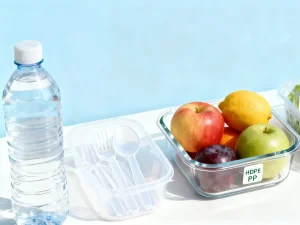
Polyethylene Terephthalate is one of the most widely used food-grade plastics. PET is known for its lightweight and transparent nature, making it ideal for food transportation. Moreover, PETE possesses barrier properties. It means polyethylene effectively prevents oxygen and moisture from entering. As a result, the food remains fresh for a long time and retains its taste.
From a safety standpoint, PET is FDA-approved for food contact. It does not leach toxic substances or spoil the food. However, PET containers are meant for single use only. Why? Because multiple reuses can deteriorate the plastic, which can release toxic substances. Therefore, recycling is the better option for PET containers. They can be melted and recycled into new items.
2- High-Density Polyethylene (HDPE)
High-Density Polyethylene (HDPE) is another highly popular and reliable food-grade plastic. What makes HDPE plastic stand out is its non-reactive nature. It does not absorb moisture or release toxic chemicals. It means food remains safe and fresh for a long time. Additionally, the HDPE is also resistant to moderate hot and cold conditions.
So you can use it outdoors without the risk of wrapping or cracking. Another top-notch property of this type of food-safe plastic is its high strength-to-density ratio. It means it is both durable and lightweight. This is a significant advantage as it makes transportation and handling easier. Moreover, the smooth surface of the HDPE makes it effortless to clean. That’s why it is commonly used in kitchen containers.
3- Polyvinyl Chloride (PVC)
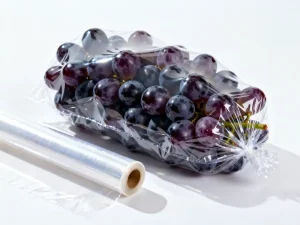
Polyvinyl Chloride (PVC) is a widely used plastic, mainly in the food industry for packaging. One of the top qualities of PVC is its excellent clarity and sealing ability. It means it creates an airtight seal, prevents moisture from entering, and keeps the food fresh.
That’s why you can find it in wrapping the fruits and foods. What I like most about the PVC is its cost-effectiveness and its lightweight nature. Cost-friendly means you can use it for large-scale food packaging. However, the lightweight nature makes it easier to transport and handle. But remember that not all PVC plastic can be used in food packaging.
Only food-safe PVC is specially designed to handle food safely. It is prepared according to strict quality standards and is FDA-approved. Moreover, PVC is also heat-sensitive. It starts to warp and release harmful toxins. So you should avoid using PVC in high heat.
4- Low-Density Polyethylene (LDPE)
Low-Density Polyethylene (LDPE) is a soft, flexible, and lightweight food-grade plastic. Unlike high-density polyethylene, LDPE has a lower density. This lower density makes it more flexible and less rigid. That’s why it is often used in cling film, bread bags, and frozen food packaging. What truly stands out about LDPE is its ability to keep the food fresh for a very long time. HOW?
Actually, it forms a protective layer around the food. This layer prevents moisture and air from getting in (two main factors in food spoilage). That’s why you can use it for food products that need a longer shelf life. However, keep in mind that LDPE only works best in cool temperatures. It’s not designed for hot environments or microwaving, as it starts to soften.
5. Polypropylene (PP)
Polypropylene (PP) is one of the most versatile and trusted food-grade plastics. What makes it stand out is its remarkable ability to handle heat and durability, like toughness. As you can see, all the above plastic types are sensitive to heat. But PP differs from them because it can withstand heat without becoming soft or changing shape.
That’s why it is commonly used in microwave-safe containers, bottle caps, and hot beverage cups. Moreover, PP is also resistant to chemicals and grease. That’s why it keeps oily foods, sauces, or dairy products uncontaminated. In manufacturing, PP is valued for its ease of molding. With plastic injection molding, it can be molded into various shapes and sizes easily.
6- Polystyrene (PS)
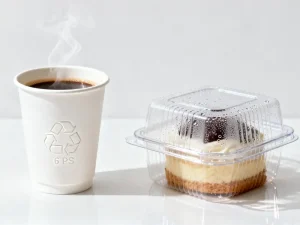
Polystyrene (PS), also known as disposable plastic, is another food-grade plastic you are already familiar with. Actually, it comes in two primary forms. The first is solid (rigid) polystyrene, and the second is expanded polystyrene foam (commonly known as Styrofoam). Both of these types are lightweight and safe for food use. However, the rigid polystyrene is clear and slightly harder.
That’s why it (polystyrene) is ideal where transparency matters. What I love about PS is its excellent insulating ability. It keeps hot food warm and cold food cool for a long time. That’s why it is used in coffee cups and fast-food packaging. However, PS is not recommended for direct exposure to heat. As I said above, it is highly soft. So direct heat can melt it instantly and spoil your food by releasing the toxin styrene.
7- Polyamide (Nylon)
Polyamide, commonly known as Nylon, is a strong, flexible plastic used in the food industry. Nylon is ideal for vacuum-sealed food packaging. Why? This is because of its toughness and resistance to tearing. It provides excellent sealing, preventing oxygen and moisture from entering. So, the food with a long shelf life remains fresh and uncontaminated.
Polyamide is often combined with other plastics, such as polyethylene, to create layers. These layers are not only durable but also flexible, making them easier to handle over long distances. Nylon also performs well under different temperature conditions. It can handle both cold and moderate heat. However, for microwave heat, Nylon is not considered suitable.
8- Polyacetal (POM)
Polyacetal, also known as POM or acetal, is a strong, stiff, and highly durable plastic. It is an engineering plastic with higher mechanical properties. But remember, POM has no contribution to food packaging. Instead, it is used to make machine parts that come into direct contact with food in the food industry. Those include gears, conveyor belt components, milk pump parts, and valve fittings.
That’s why the POM has a smooth, non-stick surface, so food particles and bacteria cannot build up. This makes it easier to clean and sanitize, which is a top requirement in maintaining food hygiene. Additionally, Polyacetal can also resist continuous stress and heat without breaking. However, it is not suitable for direct heat, such as flame contact or boiling water.
Choosing the Right Type of Food-Grade and Food-Safe Plastics
As you can see, the wide variety of food-grade and food-safe plastics varies in many respects. They have different properties and show varying performance. So, how will you decide which food-grade plastic is best for your project? Here are the key factors to consider when making a final selection.
- Food Type: The first thing to consider is what kind of food the plastic will hold. Some food-grade plastics are suitable only for dry food. However, some can handle oily, greasy foods like sausage. The food’s temperature matters because plastic reacts differently to high and low temperatures. So I recommend you always match the plastic type to the food’s temperature and nature.
- Chemical Compatibility: All food-grade plastics react differently with various substances. Acidic or fatty foods can sometimes break down the regular plastic. That’s why you should prefer HDPE and PP, as they have excellent chemical resistance.
- Durability and Reusability: Remember, some food-grade plastics are designed for single use only. If you reuse them, they start deteriorating. For example, LDPE plastic is best for one-time packaging. If your goal is reusability, Polycarbonate or PP containers are the best option as they can withstand repeated washing.
- Regulatory Approval and Safety Markings: Safety is one critical aspect in the food industry. So, you should always check whether the plastic is approved by the relevant food safety authorities (e.g., the FDA or EFSA). These plastics often feature specific symbols or recycling codes. For example, the recycling codes are 1 for PET, #2 for HDPE, and #5 for PP. These labels indicate that plastics are safe for direct food contact and will not contaminate food.
Conclusion
Plastic is all around us, from home appliances to industrial equipment. Among them, food-grade and food-safe plastics stand out for their unique properties. They are specifically designed for food handling and approved by food authorities. But not all food-grade plastics are the same, and they come in various types that I have discussed in this article. They vary in their properties and manufacturing processes.
For example, some food-grade plastics, such as PET, are sensitive to temperature. However, they prevent moisture and oxygen from entering, keeping the food safe. On the other hand, some plastics, like PP, can withstand high heat effectively. But when it comes to choosing the reliable plastic option among those, many seem confused. That’s why you should evaluate their temperature range, durability, reusability, and certification.
