


Injection molding is the backbone of modern manufacturing. It involves creating everything from simple everyday items to large industrial products. At first glance, the process may seem straightforward: melt plastic and inject it into a mold. But in reality, it requires extreme precision. Injection molding tolerance is important for the reliability of various parts.
Manufacturers carefully control these tolerances to ensure every part meets exact specifications. These parameters make a big difference in the success or failure of critical industries. If you are a newbie, this term may feel overwhelming. But worry not! This article provides a clear explanation of injection molding tolerances in simple terms. So let’s get started!
What Are Injection Molding Tolerances?
Let’s first understand what injection molding tolerances are!
Injection molding tolerances are the acceptable limits of variation in the dimensions of a molded part. Since no manufacturing process can produce parts that are 100% exact every time. Hence, tolerances set the limit of how much variation is allowed while still making the part functional and reliable.
In simple terms, tolerance refers to the amount of variation allowed in the size or shape of a part compared to its original design. Let me explain it with an example. Suppose you buy a plastic water bottle with a screw cap. The design says the cap should be 30 mm wide. However, in actual production, it may come out to 30.1 mm or 29.9 mm.
This is due to small changes in cooling or machine operation. If the cap is anywhere between 29.9 mm and 30.1 mm, it will still fit the bottle perfectly. This tiny allowed difference (±0.1 mm) is what we call the tolerance. By setting tolerances, manufacturers ensure that the cap is always within an acceptable range.
However, remember that tolerances in injection molding vary by product. Some industries, like toys or consumer goods, allow looser tolerances. The reason is that slight variations in these products don’t cause significant problems. On the other hand, fields like aerospace require very tight tolerances. WHY? Because their safety and performance depend on exact precision.
Why Are Tolerances Important in Injection Molding?
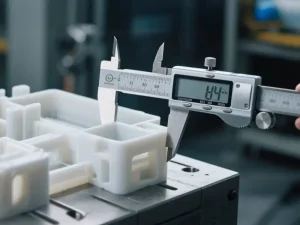
Tolerances are one of the most essential parts of injection molding. They determine whether a product will function properly, appear aesthetically pleasing, and last a long time. Without tolerances, parts may not fit together correctly, may break prematurely, or may even become unsafe to use.
Besides all these, let’s explore some other reasons why tolerances are crucial in injection molding.
- Proper Fit: Tolerances make sure that parts fit together correctly. For example, you want a phone case that perfectly covers your phone. It should be just right, neither too loose nor too tight. If tolerances are incorrect, the case may fall off or not fit properly.
- Smooth Function: Every product needs to function as expected. For example, think about a plastic syringe. It requires precise tolerances to ensure the plunger moves smoothly. If tolerances are off, it may leak or jam, making it useless.
- Consistent Quality: Customers expect products to look and work the same every time. Tolerances ensure each part is nearly identical, whether you make 100 or 1 million of them. This consistency builds trust in the product.
- Cost Control: Tighter tolerances typically result in higher costs. The reason is that they need better machines, stricter controls, and more inspections. However, by setting the right tolerances (neither too tight nor too loose), manufacturers can save money. The quality of the parts will still be excellent.
- Safety and Reliability: Safety in the aerospace sector depends on precise tolerances. Other industries, such as automobiles or medicine, also focus on tight tolerances. A small error in size could cause leaks in medical devices. However, this small error in the airplane can cause serious life hazards. So, proper tolerances keep people safe and products reliable.
Common Types of Tolerances in Injection Molding
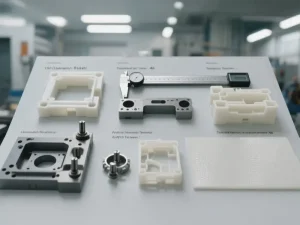
I hope you now understand injection molding tolerances and their importance. Keep in mind that tolerances vary when making parts through injection molding. Different parts of a product require various measurements to ensure they function correctly. So, let’s explore some common types of tolerances you will come across in injection molding.
1- Linear Tolerances
Linear tolerances are the allowed differences in straight-line measurements of a part. Those measurements include the length, width, height, or thickness of a part. Linear tolerances set the “safe range” of how much bigger or smaller the part can be while still being usable. Let us clarify it with an example. Suppose you make a ruler that is supposed to be 100 mm long.
In real production, one ruler might be 100.1 mm and another 99.9 mm long. Both are slightly different from the design, but they are still considered correct. WHY? Because they fall within the tolerance range of ±0.1 mm. So, without linear tolerance, almost every ruler would be rejected, even though they work perfectly fine.
2- Angular Tolerances
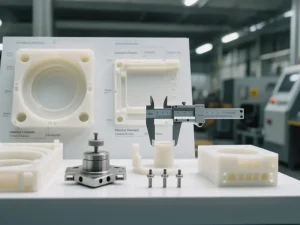
Angular tolerances are the allowed variation in angles of a part, such as bends, curves, or slanted surfaces. They ensure that if a part is designed with a specific angle, such as 90° or 45°, it can vary slightly without impacting the product’s functionality. For example, consider a plastic clip designed to bend at a 90-degree angle. You have set the tolerance of ±1°.
In reality, you may obtain a clip that bends at 89° or 91°. Both are a bit different, but they are still acceptable. WHY? Because they stay within the tolerance range of ±1°. Angular tolerances are critical when two or more parts need to connect at a certain angle. For example, in plastic housings for electronics, the edges must join at precise angles so the cover closes properly.
3- Geometric Tolerances
Geometric tolerances indicate the permissible variations in a part’s shape, orientation, or position. This type of tolerance ensures the part measures correctly and also looks and functions well in real-world use. For example, imagine a plastic bottle cap. The design may say the cap should be perfectly round.
But in reality, due to shrinkage or cooling, it may come out slightly oval. Now, even if the diameter matches the design, the cap won’t screw onto the bottle correctly. That’s why geometric tolerances are essential. By setting geometric tolerances, you control the form and shape of parts, not just their straight-line dimensions.
Geometric tolerances in injection molding may cover aspects such as:
- Flatness: makes sure a surface is not warped or uneven.
- Roundness: ensures that circular parts (such as caps or wheels) are truly round.
- Parallelism: maintains two surfaces at an even alignment.
- Concentricity: ensures that circles or holes share the same center.
4- General vs. Critical Tolerances
Not every part of a product needs the same level of precision. Tolerances can be categorized into two main groups: general tolerances and critical tolerances. This helps manufacturers decide where to be flexible and where to be very strict. Let’s first understand general tolerances.
General Tolerances:
These tolerances apply to dimensions that are not very important to the part’s overall function. Minor differences here won’t cause problems. For example, the outer surface of a plastic toy car may not need to be exact down to the last millimeter. Even if it slightly varies somewhere, the toy will still look and work fine. Using looser tolerances in these areas saves time and money.
Critical Tolerances:
Critical tolerances apply to parts or features where even tiny variations can impact performance, safety, or fit. These are the areas that need rigorous control. For example, the threads on the bottle cap must be exact. If they are too loose, the cap will leak. However, if it’s too tight, the cap won’t close properly.
5- Assembly Tolerances
Assembly tolerances refer to the allowances made when two or more parts need to fit together as a single, final product. If this tolerance is not correct, the parts may not fit properly. This can lead to problems like gaps, stiffness, or even breakage. For example, think of a plastic bottle and its cap. Both are made separately, but they need to match perfectly when twisted together.
If the tolerances are not controlled, the cap may not screw on properly, or it might feel loose. Assembly tolerances address this problem. It ensures each part is manufactured with the correct accuracy. Assembly tolerance becomes even more crucial in 2-shot injection molding. This is because this type of injection molding makes parts that require snap, slide, or lock mechanisms.
Factors That Affect Injection Molding Tolerances
Tolerances in injection molding depend on many different conditions. Many things can change the accuracy, size, and shape of the final product. Let’s see what these main factors are.
- Material Choice: The type of injection molding material used plays a role in determining tolerances. Some plastics shrink more when they cool, while others shrink less. For example, ABS plastic is more stable, while nylon absorbs water and may expand. Therefore, selecting the right material helps ensure accuracy.
- Part Design: The way the product is designed affects how well tolerances can be held. If you create the part with thin walls or very complex shapes, it is more challenging to maintain the exact size. However, simple designs are easier to mold with tight tolerances.
- Mold Quality: A mold is the hollow cavity that creates the precise shape of a product. If the mold is made with great precision, the parts will also be accurately produced. But if the mold has rough surfaces or wrong dimensions, the tolerances will be affected.
- Machine Settings: You should also set the injection molding machine correctly. For example, it should be set for time, temperature, and cooling time. Even a slight change in these settings can cause the part to shrink or expand differently. This can directly affect the tolerance.
- Environmental Factors: Lastly, consider the environmental factors. Factors such as humidity, room temperature, and storage conditions also impact tolerances. Some plastics may expand in hot weather or absorb moisture. This can change their size or shape.
Conclusion
Injection molding has become the most widely used manufacturing technique today. However, to ensure the precision of the products, manufacturers set some tolerances. Injection molding tolerances may sound technical at first. However, they are the backbone of making accurate and reliable plastic parts. However, setting the right tolerances is the key.
If tolerances are too loose, parts may not fit or work properly. If tolerances are too strict, the cost and complexity of production may rise. That’s why having the right balance is the key to success in injection molding. Moreover, you should be aware that these tolerances can also be influenced by several factors I have discussed. Failing to address any of them can lead to variations and defects in the final product.
